
Usually, turmeric is grown over 290,000-330,000 hectares of land. But in 2022-2023, according to official estimates, there has been a drop of about 10,000 hectares.
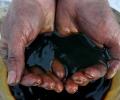
Higher discounts on crude oil offered by the United Arab Emirates (UAE) to wean India away from Russian crude may soon see Indian refiners ramping up purchases from the Gulf nation, officials at multiple refiners said. They also pointed to the recent agreement on trade settlement in national currencies signed between India and the UAE as a reason for this. "While discussions are underway, the UAE has offered discounts on crude, which will be more than that of the current level of Russian discounts.

The Central Equipment Identity Register (CEIR) of the department of telecommunications (DoT) has traced 285,000 lost or stolen mobile phones and blocked 680,000 devices since being launched. However, recoveries remain relatively low at 20,771 devices. According to government estimates, around 50,000 mobile phones are stolen every month in the country. Launched nationwide on May 16, the CEIR is a part of the DoT's Sanchar Saathi portal. It is the primary government platform aimed at protecting mobile phone users from various frauds such as identity theft, forged KYC, theft of mobile devices and banking frauds.

Lower crude oil costs and higher marketing margins are expected to raise the fortunes of oil marketing companies (OMCs) in the first quarter (Q1) of 2023-24 (FY24), while city gas distribution (CGD) companies could also benefit from lower spot prices of liquefied natural gas (LNG). However, in a break from the past, growth trends are expected to diverge for various segments within the broad energy sector. Analysts expect the earnings from gas production to go down for upstream national oil and gas companies such as Oil and Natural Gas Corporation (ONGC) and Oil India (OIL) due to the introduction of the new domestic gas pricing regime on April 1. After showing steep losses over the first half of 2022-23 (FY23), the marketing margins of OMCs have steadily recovered in four months.

Cooler weather meant that demand for milk products and value-added items like buttermilk and ice-cream did not show the usual rise.
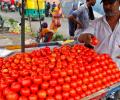
8 out of 10 households are planning to cut their tomato consumption if prices stay in the Rs 75-150 kg range over the next three months.

State-level reports every quarter for service quality and artificial intelligence-based solutions may be officially mandated as part of a set of more stringent, updated quality-of-service (QoS) norms by the Telecom Regulatory Authority of India (Trai) soon. The new norms will also factor in user experience for 5G networks, officials informed Business Standard. In February, Trai asked telecommunication (telecom) service providers (TSPs) to submit updates on measures taken to reduce call drops and lags and raise the quality of connection.

At a time when climate change poses significant challenges and the need for sustainable and efficient farming practices has never been more critical, unmanned aerial vehicles (UAVs) allow farmers to gain a bird's-eye view of their crops from ground level. Drones have become a new force in precision agriculture, helping increase productivity while prioritising sustainability and resilience. Fertiliser major IFFCO is exploring this very transformative power of technology in agriculture.

Jeera July futures in NCDEX touched a record high of Rs. 58,085 per quintal on Monday, before coming down to around Rs. 55,500 on Tuesday. This was due to profit booking and extension of additional surveillance margin of 2.5 per cent till July 18, including on all contracts to be launched in the future. The softening, according to some reports, is also because of fears of regulatory action on jeera traders over allegations of excessive speculation.

From the seas to the stars, this partnership will now be deepened by the defining role of technology, the statement said.
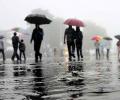
The southwest monsoon has started on a weak note and this has delayed the sowing of kharif crops. Though a cause for concern, the situation hasn't reached a stage where it warrants any panic response. Moreover, according to meteorologists and industry players, monsoon rains will witness a revival in the coming few weeks.

Prime Minister Narendra Modi's state visit to the US is expected to see discussion on India's possible entry into a US-led global alliance on critical minerals, officials told Business Standard. In June last year, the US, the European Union, and other G7 partners launched the Minerals Security Partnership to ensure that China did not further strengthen its grip on supplies of critical minerals the world over. Various ministries, including the Ministry of Finance, have communicated to the Ministry of External Affairs to explore the possibility of India joining the partnership, officials said.

After a gap of more than 13 years, the National Commodity and Derivatives Exchange (NCDEX) is all set to launch a futures contract in groundnut (in shell) to fill a void in oilseeds complex futures because of a ban in several high-volume commodities.

'As long as Amul was coming in with products it was not a problem because it was something value added and with a shelf life.' 'When it gets into the local market by procuring locally, it cuts into the market-share of local cooperatives.'

'If you are going to have only a handful of telecom players on whom the entire dream of Digital India rests, it's important they are financially sustainable.'

The government believes firms which are subject to China's laws could be forced to hand over information to Beijing's security services.

States have been told to prepare in advance to counter any impact of an adverse southwest monsoon.

Released on Wednesday, the report shows that 81 per cent of men and 72 per cent of women in India owned a mobile phone as of 2022, translating to a gender gap of 11 per cent. The numbers drop steeply in terms of mobile internet adoption. While 52 per cent of Indian men use mobile internet, women are way behind, with only 31 per cent of them accessing mobile internet, the report pointed out.

In a significant development, India is believed to have placed a funding request of around $55 million in its first call with the Pandemic Fund of the World Bank, sources said. The fund has been set up to finance critical investments in a bid to strengthen pandemic prevention, preparedness, and response capacities at national, regional, and global levels, with a focus on low- and middle-income countries. It was created in the aftermath of the Covid-19 global pandemic.

With different agencies showing divergent predictions regarding the southwest monsoon, the central government and states are gearing up to face adversity with various line ministries reportedly being directed to undertake mock drills and hold preparatory meetings. Around 56 per cent of the net cultivable area of the country is rain-fed, accounting for 44 per cent of foodgrain production. The June-September rains contribute around 73 per cent of the annual precipitation.
 © 2026 Rediff.com - Investor Information - Advertise with us - Disclaimer - Privacy Policy - Sitemap - Feedback - About us - Terms of use - Grievances